 AI GOVERNANCE · AI ACT · ISO STANDARDS
AI Act, ISO and AI governance standards: how they connect and what is mandatory
How the AI Act connects with EN 18286, ISO 42001 and specialist risk, cybersecurity and governance standards.
Read more CéntrikaGovernance·Risk·Compliance
Practical guides to better understand artificial intelligence governance, risk and compliance.
AI GOVERNANCE · AI ACT · ISO STANDARDSHow the AI Act connects with EN 18286, ISO 42001 and specialist risk, cybersecurity and governance standards.
Read more AI CYBERSECURITY · ISO/IEC 27090
AI-specific threats and how to connect security with ISO 27001, ISO 42001 and AI risk management.
Read more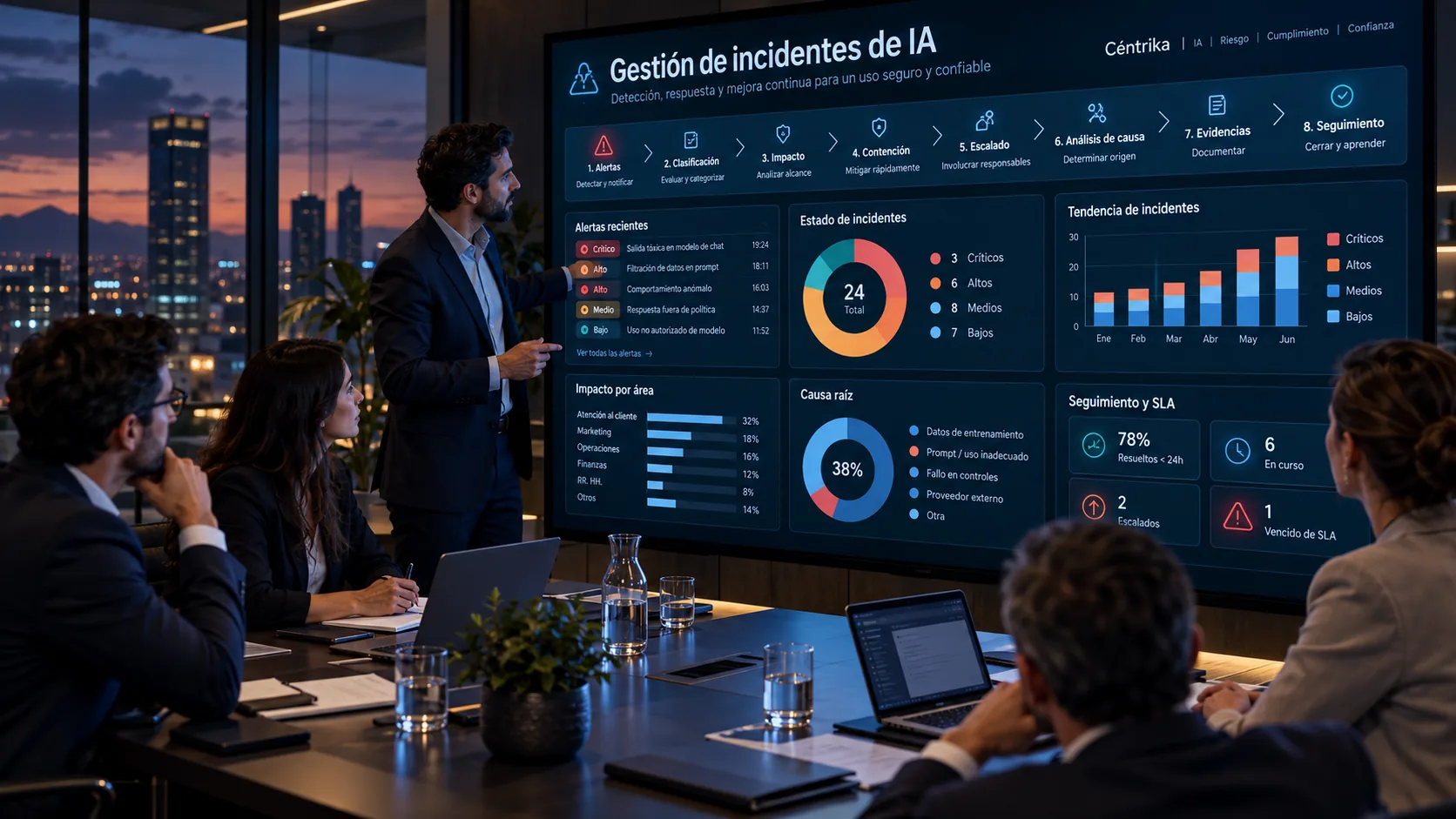 AI GOVERNANCE · INCIDENTS
Incident response, evidence, roles and serious incident reporting under AI Act Article 73.
Read more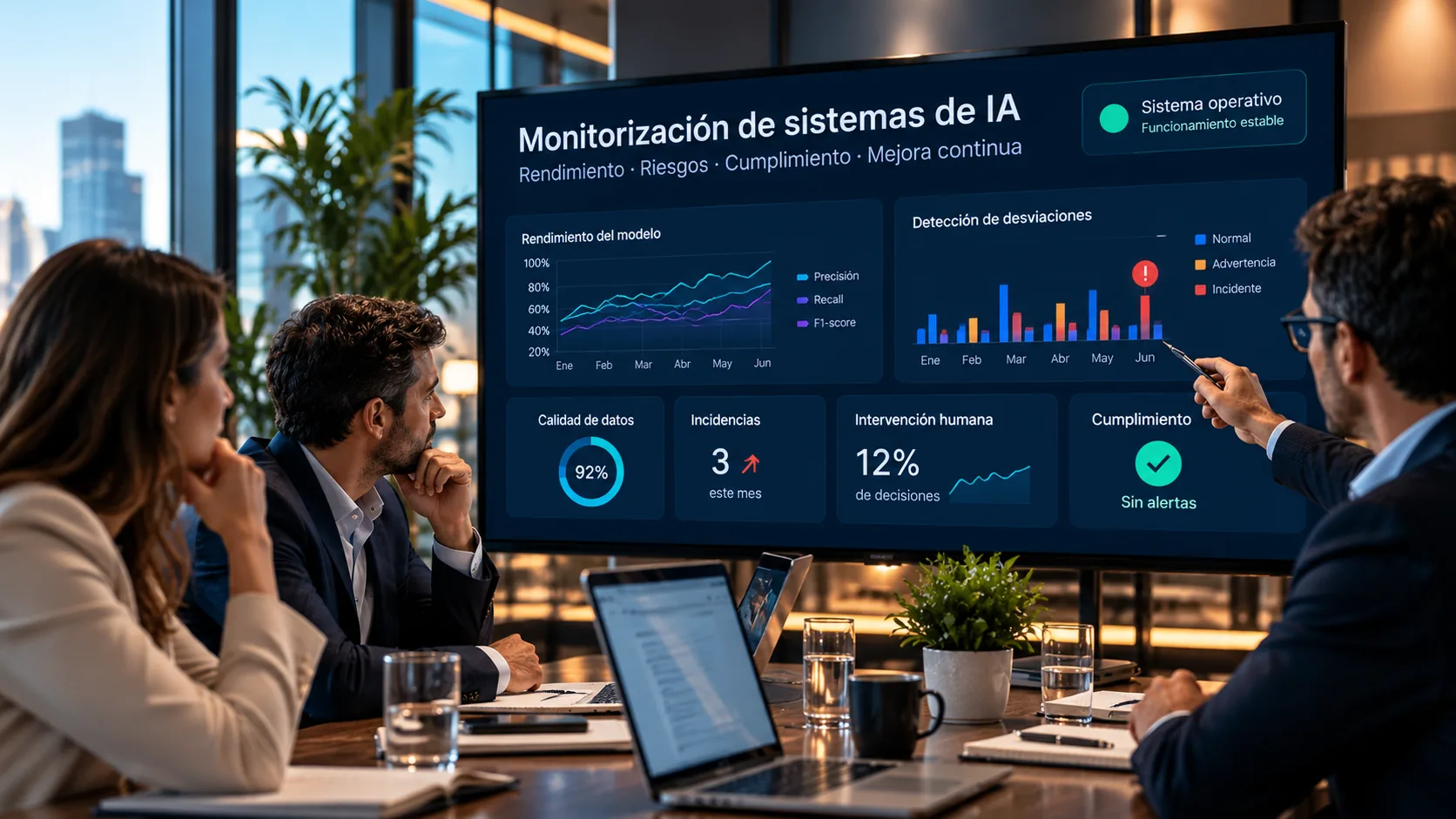 AI GOVERNANCE · MONITORING
Performance, drift, risks, KPIs, KRIs and AI Act post-market monitoring after deployment.
Read more AI ACT · TRANSPARENCY
When to inform people, which content needs technical marking and how provider and deployer duties differ.
Read more AI ACT · FUNDAMENTAL RIGHTS
Who must assess fundamental rights impacts, what Article 27 requires, the current timetable and how to record safeguards.
Read more AI ACT · COMPLIANCE
How AI Act fines vary by infringement, company size and role, and why obligations and evidence must come first.
Read more AI ACT · CONFORMITY
Which conformity route applies, when a notified body is involved and what providers must demonstrate before placing a high-risk AI system on the market.
Read more AI ACT · LOGGING & TRACEABILITY
What events to log, how long to retain records and how to use them for monitoring, oversight, audits and traceability.
Read more AI ACT · TECHNICAL DOCUMENTATION
What information should be documented to describe, assess and demonstrate the conformity of a high-risk AI system.
Read more AI GOVERNANCE · SHADOW AI
How to identify AI tools and use cases outside formal governance and bring them into a controlled and visible process.
Read more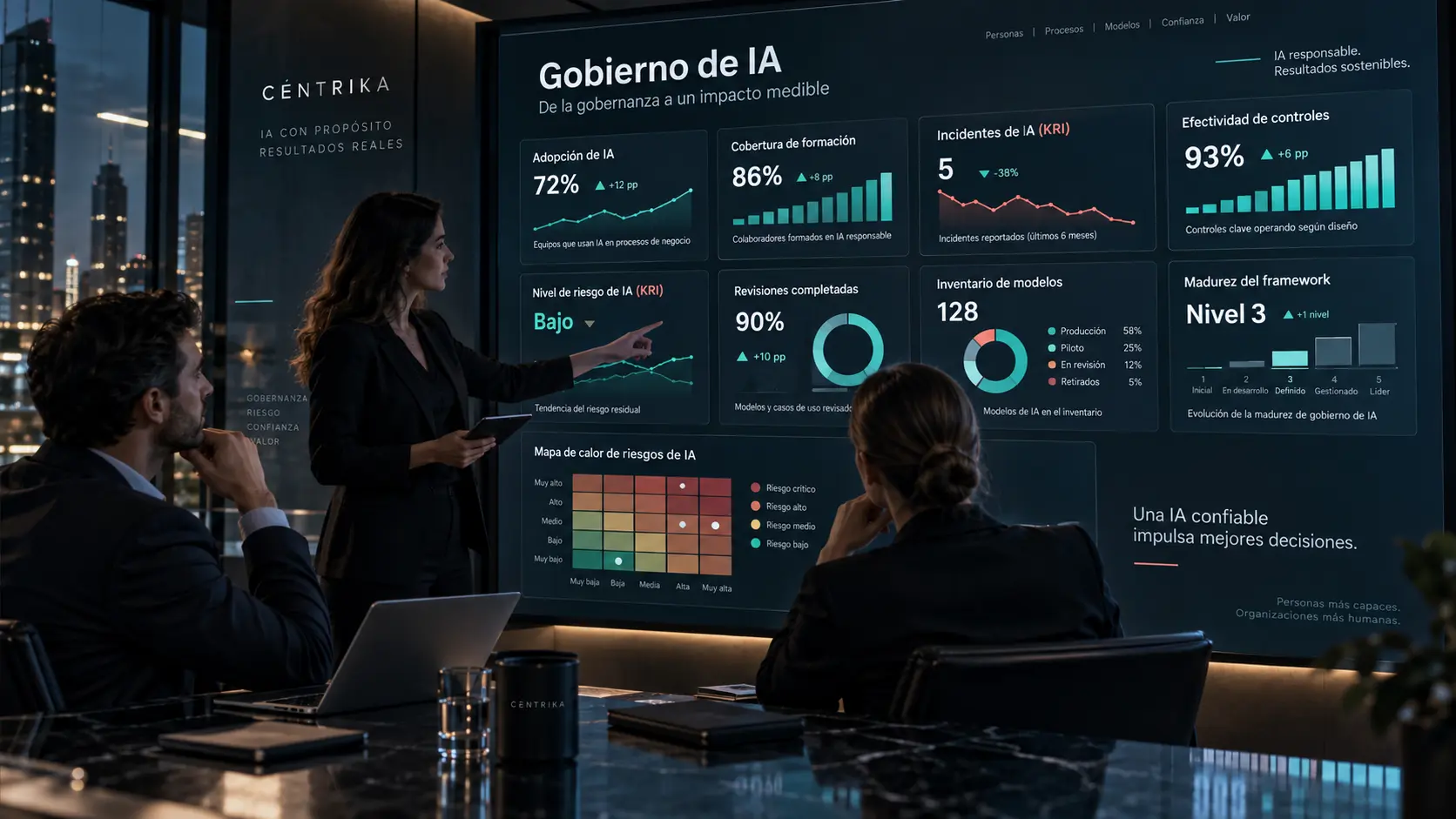 AI GOVERNANCE · METRICS
How to measure AI governance performance, risk, controls, training, vendors, evidence and maturity.
Read more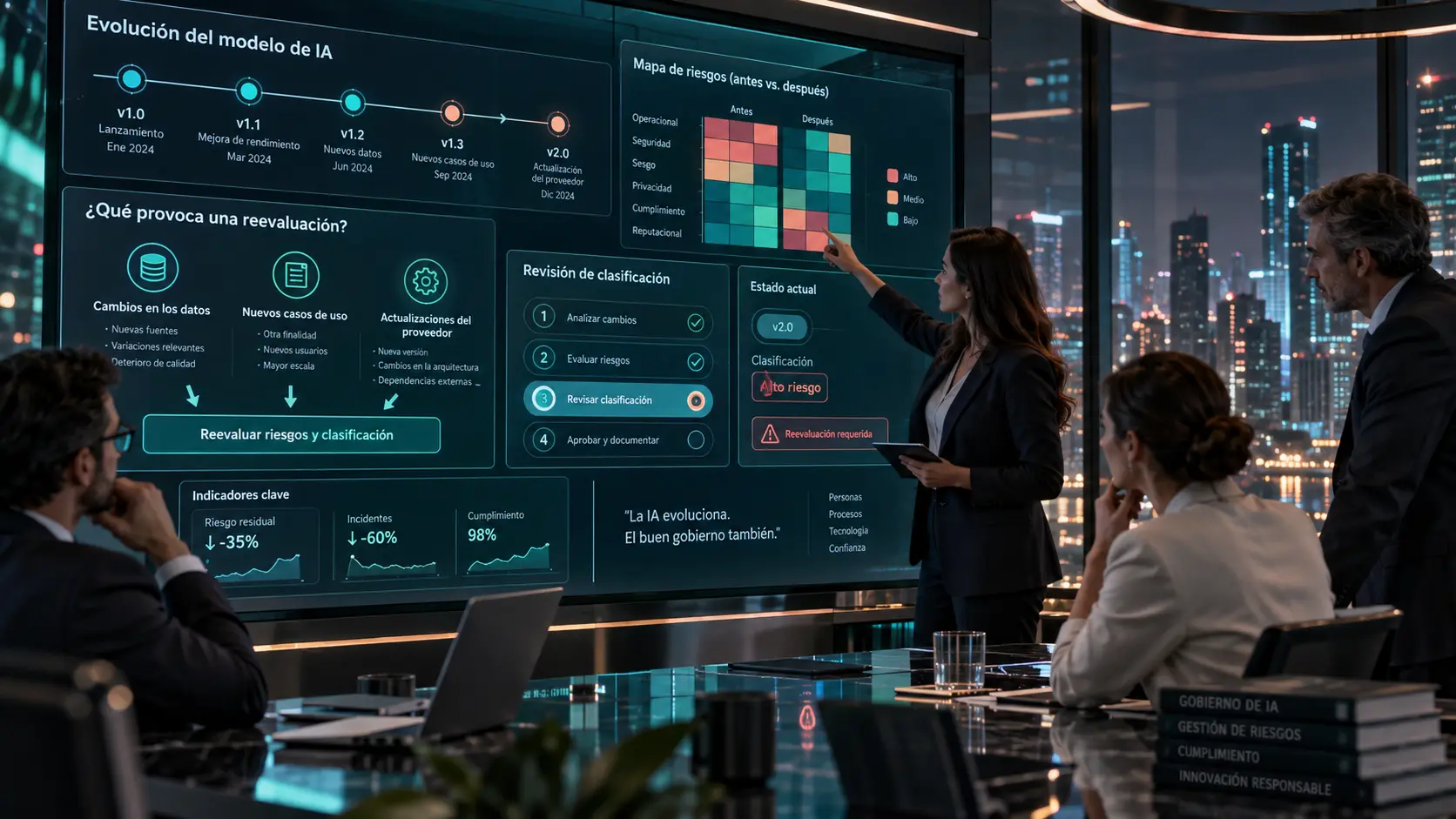 AI GOVERNANCE · LIFECYCLE
Which changes to models, data, purpose, suppliers or autonomy should trigger a new review of risk, classification and controls.
Read more AI GOVERNANCE · GENERATIVE AI
How to enable generative AI with clear rules around tools, data, risk, vendors, human review and evidence.
Read more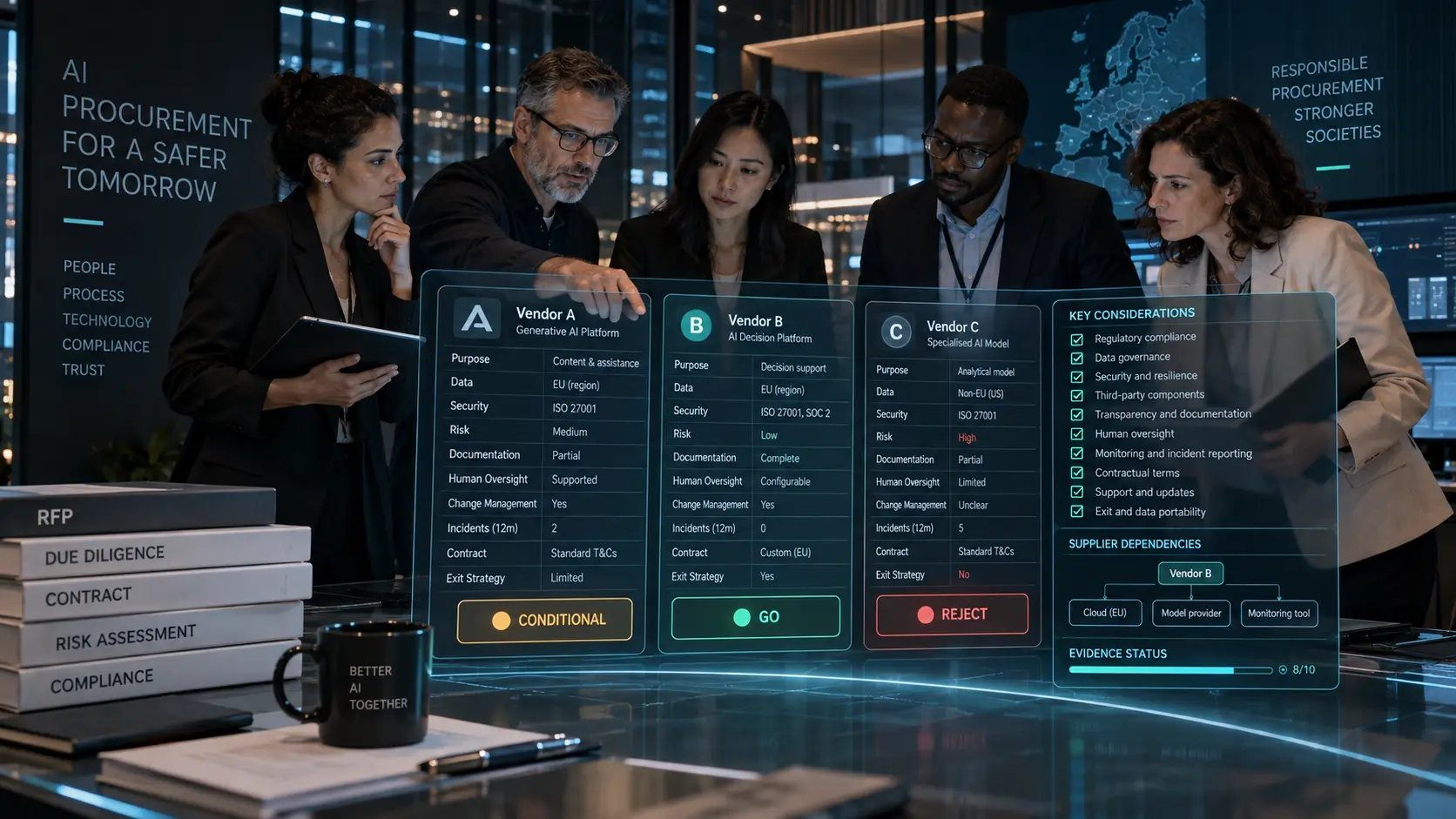 AI GOVERNANCE · VENDORS
What to assess before buying third-party AI, including purpose, data, risk, security, documentation, changes, contracts and evidence.
Read more AI ACT · HUMAN OVERSIGHT
How to define who oversees AI, what authority they need and what evidence demonstrates effective human control.
Read more AI ACT · AI LITERACY
How to develop role-based AI literacy measures based on knowledge, context, risk and responsibility.
Read more AI ACT · AI QUALITY
How EN 18286 supports the AI Act quality management system requirements and how it relates to ISO/IEC 42001.
Read more AI GOVERNANCE · INVENTORY
A practical example showing how to record AI systems and connect purpose, owners, suppliers, risk, classification, status and review.
Read more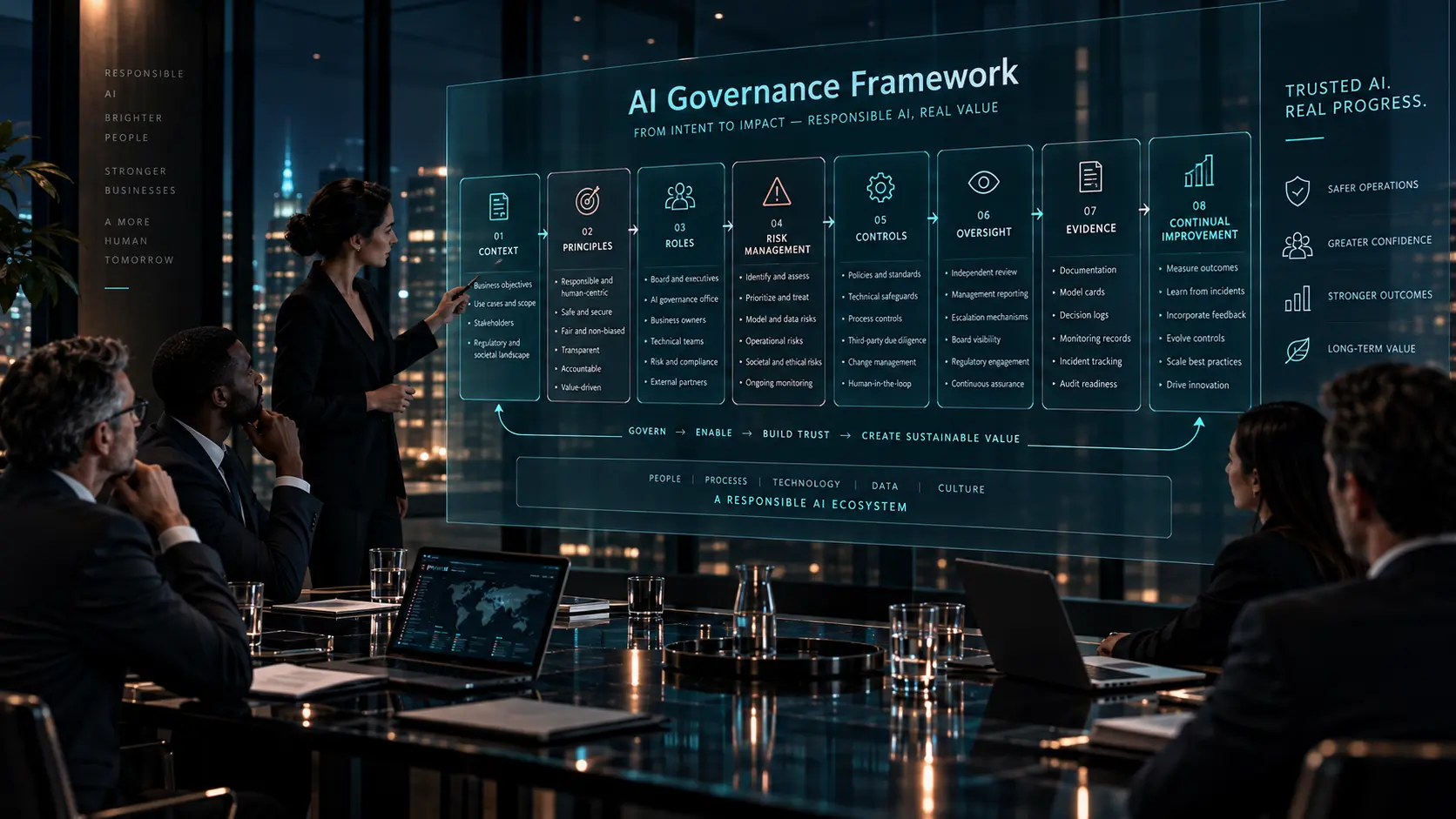 AI GOVERNANCE · FRAMEWORK
How to connect strategy, accountability, risk, controls, evidence and monitoring within a practical AI governance model.
Read more ISO 42001 · AUDIT
What evidence, processes, risks, controls and responsibilities an auditor reviews when assessing an AI management system.
Read more ISO 42001 · AI ACT
How ISO/IEC 42001 differs from the EU AI Act, where they overlap and how organisations can use both within one AI governance model.
Read more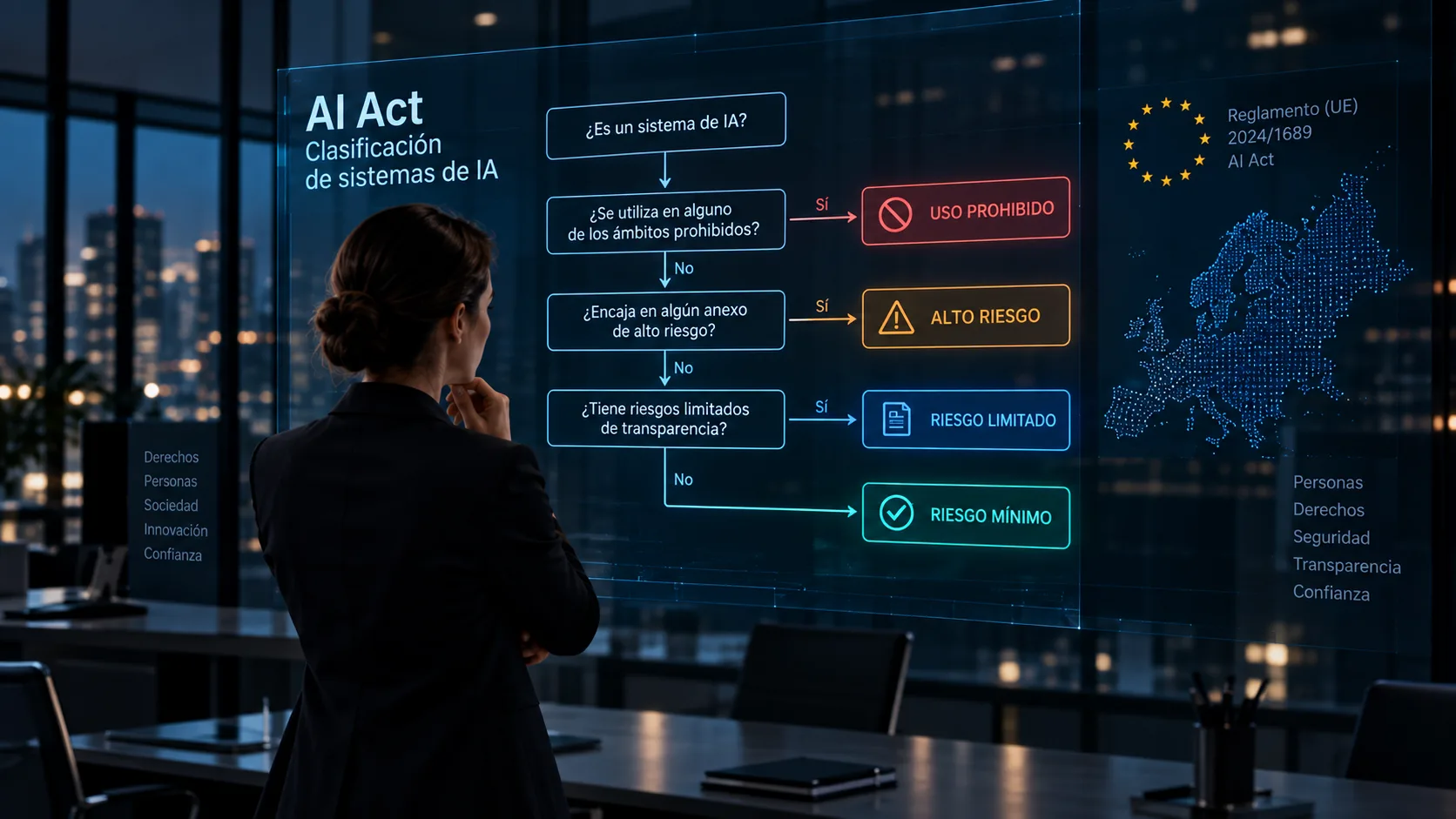 AI ACT · CLASSIFICATION
A practical method for determining whether an AI system is prohibited, high-risk or subject to other obligations under the EU AI Act.
Read more AI GOVERNANCE · ORGANISATION
Who should decide, supervise, control and remain accountable for AI systems across an organisation.
Read more AI GOVERNANCE · RISK
How to identify affected people, assess potential impacts, define controls and document decisions before deploying an AI system.
Read more ISO/IEC 42001 · IMPLEMENTATION
A practical guide from the initial assessment to an AI management system with scope, responsibilities, risk, controls, evidence and continual improvement.
Read more EU AI ACT · HIGH RISK
A straightforward guide to where to begin, what to review and why the system’s real use matters more than the technology itself.
Read more EU AI ACT · BUSINESS
Inventory, classification, owners and evidence. A practical way to begin without turning compliance into an impossible project.
Read more ISO/IEC 42001 · GOVERNANCE
A straightforward guide to AI management systems, what they are for and how an organisation can start implementing one.
Read more GOVERNANCE · AI INVENTORY
What an AI systems inventory is, what it should contain and why it is one of the first steps in governing AI within a business.
Read more GOVERNANCE · EVIDENCE
What evidence means in AI governance, what to retain and how to show that controls, reviews and decisions actually happened.
Read more GOVERNANCE · RISK
A practical guide to identifying, assessing, prioritising and treating the risks associated with artificial intelligence systems.
Read more EU AI ACT · BUSINESS
What an organisation using AI should review: roles, inventory, training, transparency, risk, suppliers, evidence and oversight.
Read more AI GOVERNANCE · POLICIES
A practical guide to setting clear rules for how employees and teams can use AI safely and consistently within an organisation.
Read more GOVERNANCE · STRATEGY
How to define roles, policies, human oversight and controls for consistent decisions about artificial intelligence.
Read more